STEM
The world is a laboratory for curious minds.

Whether it's building a towering structure from blocks or exploring the wonders of the backyard, they're engaging with the fundamentals of science, technology, engineering and mathematics (STEM). These hands-on experiences lay the groundwork for critical thinking and a lifelong love of learning.

Your School-Ager (Ages 6-10)
Encourage your child's curiosity by providing them access to different STEM-related activities. Whether they're gazing at the stars, constructing a bridge from toothpicks or solving a challenging math puzzle, every moment is an opportunity for learning. These experiences help sharpen their critical thinking, encourage creativity and develop a passion for learning.
-
Young Inventors at Work
Why does a shadow change position throughout the day? Why is the sky blue? Your child is not just asking questions — they're becoming ready to test out their own ideas and find solutions to real- world problems.
Look for Signs of Learning at Your Child's Care
Look for programs that encourage kids to think like scientists and engineers. Are there opportunities that involve observing, making predictions, experimenting and reflecting on lessons learned?
-
Digital Discoveries
In an age where technology is everywhere, understanding how it works is important. Your child might be curious about how video games are made, what makes a robot move or how computers talk to each other.
Look for Signs of Learning at Your Child's Care
Does the program include age-appropriate technology activities? Look for content that introduces basic technology concepts — like digital storytelling or robotics — in fun and interactive ways.
-
Building the Future
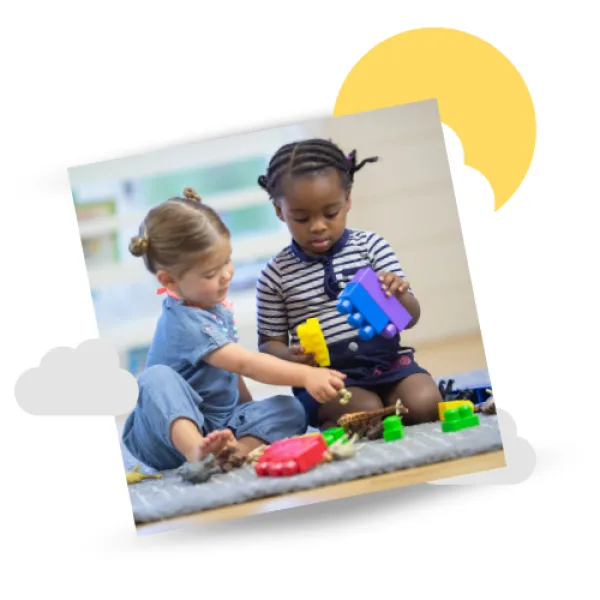
Your child is not just building with blocks — they’re experimenting with the basics of engineering. They're learning about balance, stability and how to use different materials to solve problems.
Look for Signs of Learning at Your Child's Care
Are there opportunities for children to design, build and test their creations? Look for activities that challenge them to think like engineers, like designing a simple machine or building a bridge that can hold weight.
-
Math in Motion
Math isn’t just numbers on a page — it’s a way of thinking about the world. Your child might enjoy puzzles that involve patterns, geometry and logic, seeing math as a tool for solving problems and understanding how things fit together.
Look for Signs of Learning at Your Child's Care
How does the program bring math into everyday activities? Look for fun, hands-on games and projects that apply mathematical concepts to real-life situations, encouraging kids to think critically.
Ideas to Learn and Play Together!
From morning routines to evening activities, your child continues to develop. Explore these ideas
for enhancing their skills and strengthening family bonds. Remember, all children progress at their
own pace and in unique ways. For more information about the skills and milestones for your child's
age, check out our developmental milestones resource page. If you continue to have concerns or
questions, please give us a call at 1-800-299-1627.
-
Homemade Volcano
Teach your child about chemical reactions with a classic homemade volcano. Use clay or paper mâché to build a volcano around a small bottle. Mix baking soda and vinegar in the bottle to create an eruption. This hands-on activity demonstrates a basic chemical reaction and introduces geology in a fun way
-
Plant Growth Observation
Plant a few seeds in different pots. Have your child take responsibility for watering the plants and observing their growth. Create a journal where they can record their findings, draw the plant's progress or make note of any changes. This activity teaches responsibility, the basics of plant biology and the importance of consistent care in scientific experiments